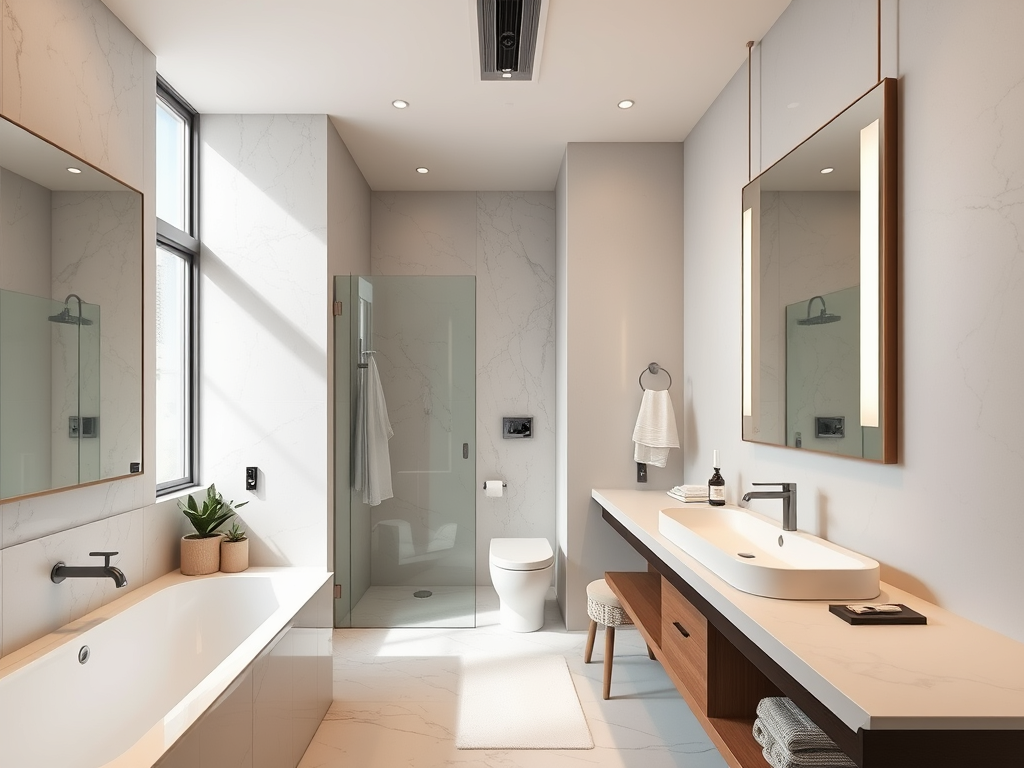
Bathroom Mechanical and Electrical Design: Safety, Comfort & Sustainability
When designing a bathroom, aesthetics are only one part of the equation. Behind every beautiful tile and elegant fixture lies a carefully planned system of plumbing, heating, ventilation, and electrical solutions. Because water, humidity, and electricity coexist in this space, bathroom mechanical and electrical design requires expert planning to ensure safety, efficiency, and long-term performance.
A well-designed bathroom infrastructure not only enhances daily comfort but also protects your home’s value for years to come.
Water Supply and Drainage Systems
Every bathroom relies on a reliable plumbing network to support sinks, showers, bathtubs, toilets, bidets, and washing machines. Key elements of professional bathroom plumbing design include:
- Ensuring consistent water pressure, even when multiple fixtures are used at the same time.
- Installing concealed pipework for a clean, minimalist aesthetic while maintaining maintenance access points.
- Properly sizing and angling drainage pipes to prevent clogs and eliminate unpleasant odors.
- Applying professional waterproofing systems beneath tiles and finishes to prevent leaks and structural damage.
Thoughtful plumbing design is the foundation of a durable and problem-free bathroom.
Energy-Efficient Hot Water Solutions
Hot water production significantly impacts both comfort and energy costs. Options include central boilers, electric water heaters, and modern tankless systems.
Today, many homeowners choose energy-efficient hot water systems, such as heat pump water heaters, which reduce energy consumption and lower long-term utility bills. Selecting the right system depends on household size, usage patterns, and sustainability goals.
Bathroom Heating for Maximum Comfort
Bathrooms often feel cooler than other rooms, making heating design essential for comfort.
- Heated towel radiators provide both warmth and functionality.
- Underfloor heating systems deliver even heat distribution and enhance the overall spa-like experience. They also help moisture evaporate more quickly, improving air quality.
- Smart thermostats and programmable timers further optimize energy efficiency.
A warm bathroom transforms daily routines into moments of relaxation.
Ventilation and Humidity Control
Effective bathroom ventilation is crucial to prevent mold, condensation, and long-term damage.
- Natural ventilation through windows is ideal when available.
- In windowless or small bathrooms, mechanical extractor fans are essential.
Advanced systems equipped with humidity sensors or timers automatically regulate airflow, maintaining a healthy indoor environment while reducing excess moisture.
Electrical Planning and Safety Standards
Electrical installations in bathrooms require strict compliance with safety regulations.
- All outlets and switches should be IP44-rated or higher, ensuring protection against moisture and splashes.
- Electrical sockets must be placed at safe distances from wet areas.
- A Residual Current Device (RCD) is mandatory to protect against electric shock.
- High-consumption appliances such as washing machines, dryers, and electric towel heaters require dedicated circuits.
Professional electrical planning ensures both safety and long-term reliability.
Bathroom Lighting Design
Bathroom lighting should combine functionality with atmosphere.
- Ambient lighting: recessed ceiling lights or flush-mounted fixtures provide general illumination.
- Task lighting: mirror lighting ensures clarity for grooming and skincare routines.
- Accent lighting: concealed LED strips around bathtubs, niches, or vanities create a calming, spa-inspired mood.
Always select moisture-resistant lighting fixtures suitable for bathroom environments.
Sustainable Bathroom Design
Sustainability is increasingly central to modern bathroom planning.
- Water-saving faucets and showerheads can reduce water consumption by up to 50%.
- LED lighting minimizes electricity use.
- Smart ventilation, thermostatic mixers, and efficient heating systems support long-term environmental responsibility.
A sustainable bathroom is not only environmentally conscious but also cost-effective over time.
Final Thoughts
Bathroom mechanical and electrical design is where technical precision meets everyday comfort. When plumbing, heating, ventilation, and electrical systems are thoughtfully planned, the result is a space that feels safe, efficient, and beautifully functional.
A well-designed bathroom is more than a visual statement — it is an investment in comfort, sustainability, and the lasting value of your home.
 Angela Interior Design